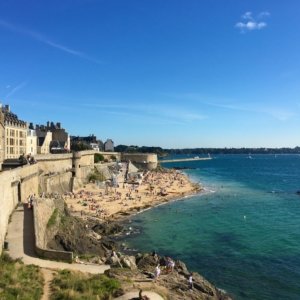
France is a country with a rich history and culture, and the West of France is home to some of the most impressive UNESCO World Heritage Sites in the world. From the stunning Mont-Saint-Michel to the Loire Valley’s fairytale castles, there is something for everyone to enjoy.
UNESCO World Heritage Sites in Western France
.
Normandy is home to three incredible UNESCO World Heritage sites, including: The Mont-Saint-Michel is a stunning island monastery that is one of the most popular tourist destinations in France. The Bayeux Tapestry, listed on UNESCO’s Memory of the World register, is a 70-meter-long embroidery that tells the story of the Norman conquest of England in 1066. Le Havre is a unique city that was rebuilt after World War II in a modern architectural style.
The Loire Valley, stretching from Sully-sur-Loire to Chalonnes-sur-Loire, earned its place on UNESCO’s World Heritage List. This prestigious recognition celebrates an exceptional cultural landscape that unfolds along the majestic Loire River. The valley is a tapestry of historic towns, grand châteaux, and picturesque vineyards, all interwoven with the natural beauty of the river.
Western France’s Most Charming Villages
.
Brittany, a region steeped in history and charm, boasts some of France’s most picturesque villages. Locronan, a medieval gem, transports visitors back in time with its well-preserved architecture. La Roche-Bernard, perched on a rocky cliff, offers stunning views of the Vilaine estuary. La Gacilly is a haven for art lovers, with its vibrant gardens and galleries. Rochefort-en-Terre, a floral wonderland, is renowned for its cobblestone streets and geranium-adorned houses. Pont-Aven, the ‘city of painters,’ inspired artists like Gauguin with its scenic riverbanks and lush landscapes. These villages, each with its unique character, showcase the timeless beauty and cultural richness of Brittany.
.
Normandy’s charm extends beyond its famed beaches to its enchanting villages. Beuvron-en-Auge, with its half-timbered houses and vibrant flower displays, epitomizes Norman countryside allure. Barfleur, a quaint fishing port, whispers tales of Viking heritage and maritime adventures. Veules-les-Roses, nestled along the coast, captivates with its thatched-roof cottages and the Veules River meandering through its heart. Saint-Céneri-le-Gérei, a haven for artists, boasts a Romanesque church and a serene atmosphere amidst lush landscapes. These villages, each with its unique character, offer a glimpse into Normandy’s timeless beauty.
.
The Loire Valley isn’t just about grand châteaux; it’s dotted with enchanting villages that captivate visitors. Sancerre, perched atop a hill, offers stunning vineyard views and world-renowned wines. Candes-Saint-Martin, where the Loire and Vienne rivers meet, exudes a tranquil charm with its Romanesque church. Yèvre-le-Châtel, a fortified village, whispers tales of medieval times. Montrésor, with its Polish connections, boasts a stunning Renaissance château. Lavardin, with its ruined fortress, is a picture of rustic beauty. These villages, each with its unique character, make the Loire Valley an unforgettable destination.
Loire Valley’s Dual Charm: Iconic and Intimate Châteaux
© Sébastien Rio
The Loire Valley is home to some of the most stunning and iconic châteaux in France. From the grand Chambord to the elegant Chenonceau, these architectural masterpieces offer a glimpse into the country’s rich history and culture. Villandry‘s exquisite gardens, Amboise‘s royal charm, and Azay-le-Rideau‘s enchanting setting are just a few of the highlights. Each château tells a unique story, with tales of kings, queens, and courtiers echoing through their halls. Exploring these magnificent structures is like stepping back in time, immersing yourself in the opulence and grandeur of the French Renaissance.
©ADT Touraine – JC Coutand
Beyond the famous châteaux of the Loire Valley lie hidden gems waiting to be discovered. Venture off the beaten path and explore the enchanting Château de Brissac, its towering façade steeped in history. Discover the elegance of Château de Serrant, a Renaissance masterpiece nestled amidst lush gardens. Step back in time at Château de Montgeoffroy, an exquisite example of 18th-century architecture. Unleash your inner child at Château du Rivau, a whimsical fortress with fairytale gardens. And don’t miss the imposing Royal Fortress of Chinon, a testament to medieval might. These lesser-known châteaux offer a glimpse into the rich tapestry of the Loire Valley, where history, architecture, and natural beauty intertwine.
Follow us on social media
Other News of “France Trip Secrets”
FAQ – Frequently Asked Questions
What UNESCO-listed sites can I visit in Normandy?
Normandy's World Heritage sites include Mont-Saint-Michel and its bay, the center of Le Havre rebuilt after World War II, and since July 2026 the D-Day Landing Beaches with Pointe du Hoc. The Bayeux Tapestry, which tells the Norman conquest of England in 1066, sits on UNESCO's separate Memory of the World register. Your trip designer can tell you how to fit these into your stay.
Which part of the Loire Valley is a UNESCO World Heritage Site?
The listed area runs along the Loire River from Sully-sur-Loire to Chalonnes-sur-Loire. UNESCO protects it as a cultural landscape, so the towns, châteaux, vineyards and the river itself are recognized together rather than as separate monuments. Well-known castles such as Chambord, Amboise and Villandry are part of this stretch, which makes it easy to see several listed places in one stay.
What are the prettiest villages to visit in Brittany?
The article picks Locronan for its medieval stone houses, La Roche-Bernard on its rock above the Vilaine estuary, La Gacilly for its gardens and photo galleries, and Rochefort-en-Terre, known for cobbled lanes and geraniums. Pont-Aven, the painters' village, completes the list. A private driver makes it possible to link two or three of them in a day.
Which charming villages should I see in Normandy?
Beuvron-en-Auge is the classic picture of the Norman countryside, with half-timbered houses and flowers. Barfleur is a small fishing port with Viking roots, Veules-les-Roses has thatched cottages along a tiny river close to the sea, and Saint-Céneri-le-Gérei, with its Romanesque church, has long attracted painters. Your guide can add one of these between bigger sites.
Which lesser-known Loire Valley châteaux are worth a visit?
Beyond Chambord and Chenonceau, the article suggests Château de Brissac with its very tall facade, Château de Serrant and its gardens, Château de Montgeoffroy, a fine example of 18th-century architecture, and Château du Rivau, whose fairytale gardens are popular with children. These quieter castles are a good way to balance a day that also includes one of the famous names.
image sources:
- France Trip Secrets – VIP experiences in Brittany – ©BERTHIER Emmanuel: ©BERTHIER Emmanuel
- France Trip Secrets – Fontevraud Royal Abbey ©Christophe MARTIN – Anjou Tourisme: ©Christophe MARTIN - Anjou Tourisme
- France Trip Secrets – Wellness stay in Brittany – ©Castelbrac: J-L T
- France Trip Secrets – VIP experiences hot air balloon ride Loire Valley – © Léonard de Serres: © Léonard de Serres
- Detail of part of the gardens of the Chambord Castle in France: Saturnino Perez Garrido